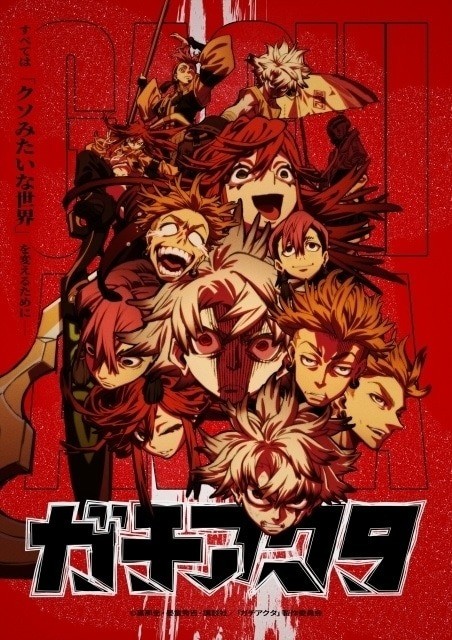
Main Story of Episode 20
At the beginning of the episode, the giant artificial trash beast created by Zodyl is becoming unstable and dangerous. The creature is preparing to fly toward the Sphere (the floating city above), which could cause massive destruction and many deaths if it reaches the boundary.
Inside the monster, several battles are happening at the same time.
Dear, Bro, and Bundus Scene
One of the most memorable parts is the strange but funny sequence involving Dear, Bro, and the Raider named Bundus.
Bundus activates his Vital Instrument, called “Hands,” which creates floating mechanical arms around him. This scene shows how powerful and unique the Raiders are compared to ordinary fighters.
Suddenly, the giant trash beast shifts violently, and all three characters begin falling through piles of debris. During this chaos, they accidentally land inside a flying car while still arguing and trying to fight each other.
This car sequence became famous among fans because it mixed comedy with danger. Many viewers on Reddit praised the animation and humor of this scene.
Although the scene looks silly, it actually has an important purpose:
- It releases tension after several dark episodes.
- It shows how unpredictable the world of Gachiakuta is.
- It demonstrates survival through cooperation, even among enemies.
Eventually, Bro cleverly uses a metal pole to steer the car into a safe tunnel, and they reunite with Enjin.
Enjin’s Importance in This Episode
The title “Ensign” mainly refers to Enjin.
This episode explains the deeper meaning of his name. Enjin says that the name was given to him by someone important, and it means:
“A person who connects others.”
This perfectly represents his role in the story:
- He keeps the Cleaners united.
- He protects his teammates emotionally.
- He acts as the bridge between different personalities.
Even when the team is separated and communication is failing, Enjin remains calm and focused. He promises to gather everyone together again.
This moment shows why he is such a respected leader.
Rudo vs Zodyl — The Emotional Core
The most important part of Episode 20 is the conversation between Rudo and Zodyl.
Zodyl tries to convince Rudo to join the Raiders instead of the Cleaners.
Why?
Because both Rudo and the Raiders hate the corruption of the Sphere. Zodyl believes:
- the world is rotten,
- destruction is necessary,
- and the Cleaners are wasting time fighting trash beasts instead of changing society.
At first, his argument sounds logical.
But Rudo rejects him completely.
This is a major turning point for Rudo’s character.
Earlier in the series, Rudo was filled mostly with:
- anger,
- revenge,
- loneliness,
- and hatred toward society.
But in Episode 20, he realizes something important:
The Cleaners gave him something he never had before — people who truly care about him.
Rudo says that nothing is meaningless or “trash,” including his relationships with his teammates. This directly opposes the philosophy of the Raiders.
This moment is powerful because it shows Rudo changing from:
- a lonely survivor,
to - someone who values connection and friendship.
Symbolism in the Episode
1. Trash and Value
One of the central themes of Gachiakuta is:
“Nothing is truly worthless.”
Episode 20 reinforces this theme strongly.
Rudo was treated like garbage by society, but the Cleaners proved he still has value.
Even broken objects become powerful through Vital Instruments.
The episode repeatedly asks:
- What does society throw away?
- Who decides what has worth?
2. Falling Scene
The long falling sequence inside the trash beast symbolizes chaos and uncertainty.
The characters literally fall through piles of discarded objects, representing the unstable world they live in.
But despite falling:
- they survive,
- adapt,
- and continue moving forward.
This reflects the entire message of the series.
3. Enjin’s Arrival
At the end of the episode, when Zodyl attacks Rudo, Enjin dramatically breaks through the ground and appears beside him.
This scene symbolizes:
- rescue,
- trust,
- and unity.
Rudo is no longer alone.
That single moment completely destroys Zodyl’s argument.